Coffee Pods vs Ground Coffee: Which Format Is Better for Your Daily Routine?
Some people want their coffee in 30 seconds with no effort. Others, at 6 a.m., grind coffee beans as if it were a sacred morning ritual. Both approaches have their merits.
The whole coffee pods vs ground coffee debate usually comes down to one thing: what kind of coffee drinker you actually are. Convenience matters. Flavor matters too. So does cleanup. And the fact that nobody wants to deal with complicated brewing methods before fully waking up.
So before you buy another box of single serve coffee pods or commit to grinding beans every morning, it’s worth figuring out what actually fits your routine.
Why Coffee Format Matters
Coffee isn’t just a drink. It’s a ritual, a religion, and sometimes the only reason to get out of bed. That’s why choosing the right type of coffee is no small matter. It’s about the kind of person you want to be at 7 a.m.
The Convenience Problem
You wake up half‑asleep, noise in your head, and the question is simple: how hard should it be to get caffeine?
Pods say: zero effort. Insert, press, done — the machine handles the rest while you lean on the wall.
Ground brew demands choices: measure, grind, filter, water at 93°C. For some it's a ritual, for others too many steps before the first sip.
The Freshness Problem
Whole beans keep flavor longer; ground loses aroma fast — within minutes. Pods help by sealing coffee, but they still fade over time. Pods usually expire in 6–12 months: safe, but flatter taste. Ground brew lasts weeks if sealed away from heat and light; leave it open, and in two weeks it tastes like disappointment.
What Coffee Pods Are Best For
Coffee pods deserve more credit than they usually get.
Machines like the Nespresso Vertuo can literally scan a barcode on the pod and adjust brewing automatically. Which is honestly kind of absurd when you think about how much effort people used to put into coffee just 20 years ago.
Fast Single-Cup Brewing
Pods are built for speed and predictability.
One cup. One person. No leftover half-pot sitting around getting progressively sadder for the next three hours.
If you live alone, work weird hours, or everybody in your house drinks something different, single serve coffee pods make a lot of sense. And the best coffee pods now come in way more variety than people expect:
-
light roast;
-
dark roast;
-
flavored;
-
limited edition releases;
-
espresso-style blends.
Тhere’s basically something for every level of caffeine dependency.
Brands like Black Rifle Coffee lean especially hard into bold, extra-strong pods for people who want their morning coffee to feel slightly aggressive.
Consistent Flavor
The main advantage of coffee capsules is consistency. Every cup will taste exactly like the last. No surprises. Once you’ve found “the one”—that perfect flavor—it’ll be with you every morning. For daily coffee drinkers who value consistency over adventure, this isn’t a drawback—it’s a selling point.
What Ground Coffee Is Best For
Ground coffee is for people who like having control over the process. Which makes sense when you’re making something you drink every single day of your life.
More Control Over Strength
Want a double shot? Here you go. Prefer a mild coffee for breakfast and a strong espresso after lunch? Just adjust the proportions. Ground coffee is the canvas, and you’re the artist. Or at least someone with a spoon and their own opinion on strength.
Try making cold brew coffee from capsules—and you’ll understand the limitations of this format. Cold brewing requires a coarse grind, prolonged contact between water and coffee, and patience for 12–24 hours. A capsule is powerless here. But good ground coffee turns into a smooth, rich drink without a single hint of bitterness.
Better Flexibility Across Brewing Methods
The same ground coffee can be used in a French press, for pour-over brewing, in an AeroPress, in a moka pot, or in a drip coffee maker—depending on what you decide to use that day.
By changing the grind size or brewing method, you can completely transform the flavor profile of your coffee.
It’s hard to beat that kind of flexibility.
Capsules are more like buying a single, highly efficient kitchen gadget. Ground coffee, on the other hand, is more like having the ingredients to make something truly special.
Compare Pods and Ground Coffee
Alright. No marketing. Just the real tradeoffs.
Freshness
Freshly ground coffee from recently roasted coffee beans will almost always taste more vibrant than pods.
That said, pods absolutely beat ground coffee that’s been sitting open on the counter for two weeks absorbing sunlight and kitchen smells.
So honestly? The winner here is mostly whoever stores their coffee properly.
And yes, how should you store ground coffee matters more than people think:
airtight container, cool dark place, away from moisture and weird kitchen odors. Not the fridge. Definitely not next to spices unless you want cinnamon-garlic espresso by accident.
Taste
Taste is subjective, obviously.
But generally speaking, really good ground coffee has a higher ceiling. More complexity. More aroma. More character.
Pods are designed more around balance and consistency.
They’re not really competing in the same category. One is convenience-first. The other is flavor-first.
Cost per Cup
This part is less philosophical and more math.
A single coffee pod usually lands somewhere around $0.70–$1.50 per cup. Ground coffee is often cheaper:
-
standard coffee: around $0.20–$0.40 per cup
-
specialty coffee: around $0.50–$0.80
So if you drink multiple coffees a day, the difference adds up surprisingly fast.
At a certain point, the money saved on ground coffee starts looking suspiciously like “new grinder budget.”
Cleanup
Pods are undeniably easier.
Remove the pod. Toss pod. Quick wipe. Done.
Ground coffee takes a little more effort — dumping grounds, rinsing equipment, cleaning filters or portafilters depending on the setup.
Objectively, it’s maybe five extra minutes.
Subjectively, on a Monday morning, it can feel like a heroic act.
How Concept Cafes Fits Both Routines
Good coffee brands don’t force people into one camp.
Because honestly, different mornings call for different levels of effort.
Single Serve Pods for Speed
Some mornings you have a meeting in 20 minutes and somehow still aren’t wearing pants.
That’s where single serve coffee pods shine.
Water reservoir filled the night before, pod ready to go, button pressed — suddenly life feels manageable again.
And when the pods themselves are made from quality coffee, the result is genuinely solid. Fast doesn’t automatically mean bad anymore.
Ground Coffee for Ritual
Then there are slower mornings.
Saturday sunlight. Quiet kitchen. Making pour over with a kettle or standing over a moka pot for no reason other than the process feels nice.
That’s the part pods can’t really replace.
Ground coffee turns brewing into a small ritual instead of just caffeine delivery. And honestly, that might be its most underrated quality.
Quick Comparison: Coffee Pods vs Ground Coffee
If you're the type who likes to make decisions based on tables—here it is. No emotions, just facts.
|
Feature |
Pods |
Ground |
|
Brew time |
30–60 seconds |
3–10 minutes |
|
Flavor control |
Limited |
Full |
|
Cost per cup |
$0.70–1.50 |
$0.20–0.80 |
|
Freshness |
Sealed at production |
Maximum from fresh beans |
|
Cleanup |
Minimal |
A few minutes |
|
Brewing methods |
Machine-specific only |
Any method |
|
Shelf life |
6–12 months |
Up to 1 month after opening |
|
Cold brew |
Not possible |
Yes |
|
Eco footprint |
More waste |
Less waste |
|
Best for |
Busy weekday mornings |
Weekends & coffee lovers |
«Specialty coffee isn’t about snobbery — it’s about awareness. Coffee beans lose up to 60% of their volatile aromatic compounds within the first 15 minutes after grinding [1]. That’s exactly why professional baristas never work with pre-ground coffee that has been sitting around. If you want to understand the difference, grind your beans right before brewing at least once. After that, there’s usually no going back.»
— Concept Cafes, based on sensory research data from SCA.
Final Verdict: Choose Based on Routine, Not Hype
Are coffee pods better than ground coffee? Wrong question. The real one is simpler: what actually fits your mornings?
If you want speed and zero effort, Coffee Pods make perfect sense. They’re built for consistency — press a button, get a cup, move on with your day.
If you care more about freshness, control, and switching between brewing methods, ground coffee gives you way more room to play. That’s where guides like Freshly Roasted Coffee Guide or Dark Roast vs Medium Roast actually start to matter — because flavor becomes something you can actively shape, not just receive.
Or don’t overthink it. A lot of people just use pods on weekdays and switch to whole beans on weekends. Coffee doesn’t really care about loyalty — it cares about timing.
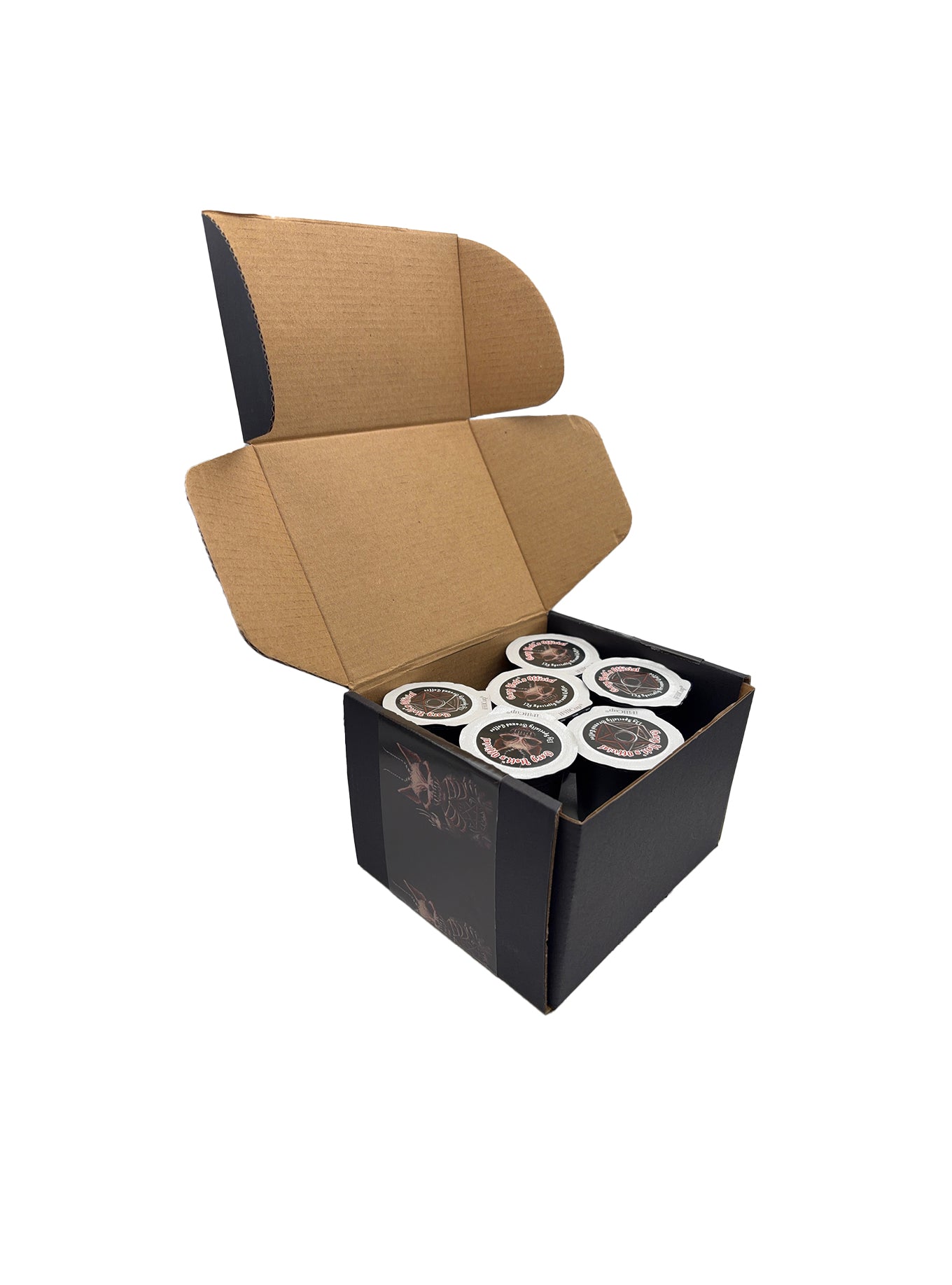
Are coffee pods good for daily coffee drinkers? Yes — especially when you want something fast, predictable, and low-effort. Even niche releases like Cannibal Corpse K-Cups or Motörhead Nitro Cold Brew Cans exist for exactly that kind of “grab and go” routine.
And when should you choose ground coffee instead? When you want more depth — or when you’re experimenting beyond capsules. Cold brew, for example, is a completely different experience with the right beans, like in our Best Coffee Beans for Cold Brew.
Because in the end, coffee isn’t about formats. It’s about the moment you’re in.
If you want to explore both sides properly, you can always browse the full range here — All Products.
FAQ
What are coffee pods?
Coffee pods are pre-measured portions of ground coffee sealed in capsules designed for single-serve machines like Nespresso or similar systems.
Are coffee pods better than ground coffee?
It depends on what you value. Pods win on convenience and consistency. Ground coffee wins on freshness, control, and flexibility.
Do coffee pods expire?
Yes. Typically within 6–12 months, although they remain safe to use beyond that period. Flavor just gradually weakens.
How long does ground coffee last?
Ground coffee is best within 2–4 weeks after opening if stored properly in an airtight container.
How should you store ground coffee?
Keep it in a cool, dry place in an airtight container. Avoid heat, moisture, and sunlight. No fridge.
Are coffee pods good for daily coffee drinkers?
Yes — especially if consistency and speed matter more than experimentation or flavor complexity.
When should you choose ground coffee instead of pods?
When you want more control over brewing, better freshness, or access to different brewing methods like pour over or cold brew.
References
-
Schenker, S., et al. (2002). Flavour formation in coffee during roasting. Journal of the Science of Food and Agriculture.
-
Espinoza Guevara, R., et al. (2021). Shelf life of coffee capsules: effect of modified atmosphere packaging on aroma retention. Food Packaging and Shelf Life.
-
National Coffee Association USA (NCA). (2024). National Coffee Data Trends Report. ncausa.org.