Organic Coffee vs Regular Coffee: Taste, Farming, Price and What to Buy

Coffee people always notice the small stuff. One will argue about roast levels, another swears by grind size, and there’s always someone convinced their coffee is better just because it comes from a tiny mountain farm.
And lately, one more debate keeps popping up: organic coffee or regular coffee. On paper it sounds like just another label, but coffee isn’t a small niche product — it’s everywhere, and huge global demand shapes how it’s grown.
To keep up, conventional farms often rely on synthetic fertilizers and pesticides. Organic coffee goes a different way, sticking to stricter farming rules and limiting those inputs.
Some people care because of their health. Some care about the planet. And some just want to know one thing — does organic coffee actually taste different?
Why Organic Coffee Became a Buying Question
When coffee fans argue, it’s less like a polite debate and more like a mosh pit — and now the pit has a new riff: health concerns.
If you want to see what transparent sourcing looks like in practice, the All Collections page at Concept Cafes is a useful reference point before diving into the labels.
Health Concerns
One of the main reasons people search for organic coffee is concern about pesticide exposure. Conventional coffee farming may involve synthetic fertilizers, herbicides, and chemical pesticides. Organic farming restricts or eliminates many of these substances.
Think of it this way: some drinkers want their morning brew to be pure fuel, not a chemical cocktail that feels like it came out of a lab instead of a roaster. These are the folks who scan labels like guitarists checking pedalboards — hunting for words like:
-
Organic beans — grown without synthetic inputs.
-
Mold‑free brews — no risk of funky contamination.
-
Purity blends — marketed as “clean fuel” for your cup.
-
Eco‑friendly options — supporting sustainable farming practices.
-
Cleaner instant packs — quick fixes without extra additives.
Some even claim organic coffee is easier on digestion — though science plays that tune with plenty of distortion, depending on the roast and product.
And then there’s the backstage nightmare: storage. Bad drying or sloppy transport can turn organic coffee beans into a moldy mess faster than a garage band demo. That’s why some specialty roasters scream “mold free coffee” like it’s their headline track. But here’s the kicker — mold prevention is more about harvest, drying, and storage discipline than about the organic label itself.
Sustainability concerns
Coffee isn’t just fuel for headbanging — it’s also farming that can wreck or protect the planet. Big industrial plantations? They chew up soil, poison water, and chop down forests like it’s an endless encore.
Organic farms, on the other hand, play it more old‑school:
-
Natural compost — feeding the ground instead of blasting it with chemicals.
-
Shade‑grown — trees stay up, birds keep singing.
-
Crop rotation — fields don’t burn out after one tour.
-
Less chemical runoff — rivers don’t turn into toxic sludge.
And yeah, packaging matters too. Pods are convenient, but unless they’re recyclable or compostable, they’re basically trash riffs — loud, fast, and piling up in landfills.
“Great coffee should leave an impact in the cup — not on the planet.” — Concept Cafes
What Organic Coffee Means
Before comparing organic coffee vs regular coffee on taste or price, it's worth being precise about what the label actually certifies — and what it doesn't.
USDA organic certification
In the U.S., coffee can’t just call itself organic because the bag looks earthy and has a leaf on it. To carry the USDA organic label, the coffee has to meet official farming standards set by the United States Department of Agriculture.
In simple terms, that usually means the beans were grown with fewer synthetic chemicals and under tighter farming rules. Certified organic coffee typically:
-
avoids most synthetic pesticides;
-
avoids genetically modified ingredients;
-
uses approved natural fertilizers;
-
follows controlled growing and processing practices.
And yes — this can apply to almost everything from whole beans and ground coffee to instant coffee and even some coffee pods.
Of course, an organic label doesn’t automatically mean the coffee will blow your speakers out with flavor. It just tells you more about how the coffee was grown before it ever reached the roaster.
Farming restrictions
Organic coffee farming is basically the “no shortcuts” version of agriculture. Farmers can’t just spray chemicals like they’re pyrotechnics at a show. Instead, they have to grind it out with old‑school methods:
-
No synthetic pesticides — bugs aren’t blasted with lab‑made toxins.
-
No chemical fertilizers — soil gets fed with compost riffs instead.
-
Manual weed control — farmers literally fight weeds like stage divers in the pit.
-
Natural pest management — birds, insects, and biology do the heavy lifting.
-
Cover crops — fields stay alive between harvests, like a band keeping energy between tours.
The result? Lower yields, more sweat, and higher costs. But for fans who want their beans raised without chemical solos, this farming style is the real deal — raw, loud, and uncompromising.
What Organic Coffee Does Not Guarantee
Here’s the reality: an organic label can tell you a lot about how coffee was grown, but it doesn’t automatically guarantee a stadium-level cup. Flavor, freshness, sourcing, and roasting quality still matter far more than the certification alone.
Flavor Quality
One of the biggest misconceptions is that organic automatically means premium taste. In reality, flavor is shaped by the real rockstars of coffee:
-
Bean variety — genetics matter more than the sticker.
-
Altitude — higher ground, brighter notes.
-
Soil conditions — terroir sets the tone.
-
Roast quality — precision beats hype every time.
-
Freshness — stale beans are like a dead crowd.
-
Processing methods — washed, natural, honey — each plays a different riff. Roasting expertise — the roaster is the lead guitarist here.
Roast profile can completely reshape the same beans, especially when comparing Dark Roast vs Medium Roast.
A non‑organic specialty coffee can shred way harder than a poorly sourced organic one. Some of the best organic brews come from roasters who know their craft and treat sourcing like writing a killer setlist. That’s also why debates around Single Origin vs Coffee Blends. matter so much in specialty coffee.
But certification alone doesn’t guarantee rich flavor, sweetness, or balance — it just means the beans passed the “no chemicals” test, not the “blow your mind” test.
Farmer Compensation
Organic certification is about farming rules, not farmer paychecks. A coffee can be fully organic while the people growing it still earn very little.
That’s where fair trade coffee comes in. This second certification focuses more on stable pricing and better working conditions for farmers — the difference between playing a sold-out show and getting paid in “exposure.”
And the two labels are not the same thing. Coffee can be:
-
organic but not certified for farmer compensation;
-
focused on ethical pay but grown conventionally;
-
both;
-
or neither, while still being high quality.
Good coffee doesn’t need marketing noise. Like good metal, it speaks for itself.”— Concept Cafes.
Organic Coffee vs Regular Coffee
Think of it like two rival bands battling on stage: one screams “organic purity,” the other blasts “conventional power chords.” The crowd wants to know — who actually plays tighter riffs in the cup?
Taste
Here’s the kicker: there’s no guaranteed flavor solo just because beans are organic. The real difference comes down to whether you’re drinking specialty grade or commodity grade.
-
Specialty beans — whether organic or not — deliver complex notes, balance, and clarity, like a perfectly tuned guitar.
-
Commodity beans — supermarket blends roasted dark to hide flaws — taste flat, like a muddy garage demo.
So the taste divide isn’t organic vs regular, it’s quality vs mediocrity. Bean choice matters too — especially when comparing Arabica vs Robusta for flavor, bitterness, and caffeine intensity.
The Real Cost Behind Farming and Production
Think of it less as a debate — and more as a comparison of signals that actually influence your cup.
Coffee Labels vs Real-World Quality Factors:
|
Factor |
Organic |
Regular |
What matters |
|
Farming inputs |
Limited synthetic chemicals |
Fertilizers & pesticides allowed |
Soil health & farming discipline |
|
Flavor |
No guaranteed advantage |
No guaranteed disadvantage |
Bean quality + roast skill |
|
Price |
Usually higher (20–50%) |
Lower |
Production scale & processing quality |
|
Certification |
Required standards (USDA organic) |
None |
Transparency of sourcing |
|
Sustainability |
Often more eco-focused |
Varies widely |
Actual farming practices |
|
Final cup result |
Can be excellent or average |
Can be excellent or average |
What you actually taste in the cup |
What this really shows is simple: organic coffee changes how coffee is grown — not whether it is automatically better in the cup. The final result always depends on farming detail, processing, and roasting craft more than any single label.
How Concept Cafes Approaches Coffee Quality
Concept Cafes doesn’t just follow standard certification guidelines. The company has its own quality principles that speak louder than any label.
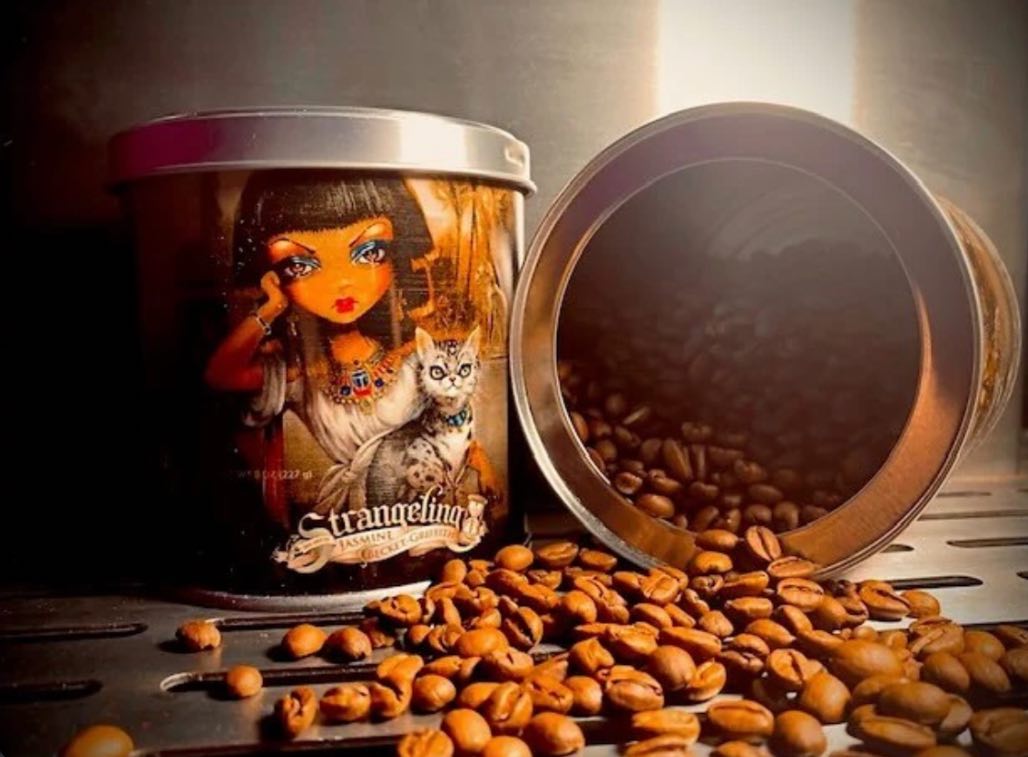
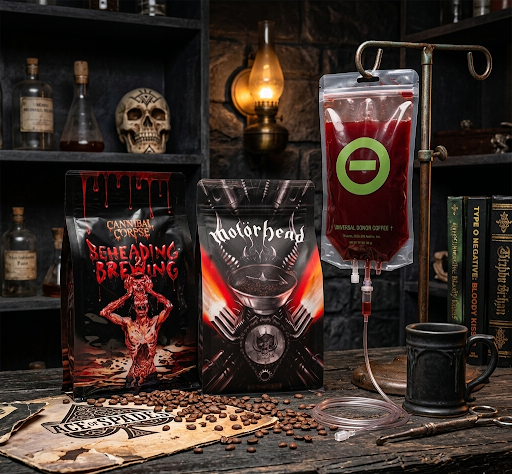
That same philosophy shows up in releases like Cannibal Corpse Coffee and the limited Katrina Possession Coffee Tins — bold coffees built around flavor and identity, not just labels.

Specialty-grade beans
Forget supermarket blends. Concept Cafes only works with specialty grade beans — the kind that score 80+ on the cupping scale. That means complexity, balance, and flavor clarity, not just a dark roast hiding flaws. It’s like picking virtuoso guitarists instead of garage amateurs.
First-grade grains
Within the specialty tier, they go for first‑grade grains — uniform size, moisture, and consistency. Why? Because uneven beans roast like a sloppy band: some notes undercooked, others burnt. With first‑grade lots, roasters can dial in precise profiles, delivering clean, expressive cups that hit like a perfect solo.
Zero primary defects
Concept Cafes enforces zero primary defects. No black beans, no sour beans, no fungus‑damaged rejects. Even one bad bean can ruin the whole track, adding musty or sour notes. By cutting defects, they also dodge the dreaded mold issue — something organic certification alone can’t guarantee. Here, quality control is the real amplifier.
How to Buy Better Coffee Without Falling for Claims
Buying coffee can feel like picking a band off a festival lineup — flashy names everywhere, but only a few can actually play. Browsing curated All Collections is usually a better starting point than chasing random supermarket labels.
The trick is knowing which signals point to real quality and which are just marketing noise cranked to max volume.
Check origin and roast information
If the bag doesn’t tell you where the beans came from, it’s basically an anonymous demo tape — probably commodity grade. Look for origin details: country, region, even the farm or cooperative. That’s how you know the roaster has traceable sourcing.
And don’t skip the roast date. A bag with only a “best by” two years out is like a band still touring on its first single — stale and uninspired. Fresh roast dates mean the roaster cares about quality, not just shelf life. If you want to go deeper into why timing matters so much, this Freshly Roasted Coffee Guide breaks it down perfectly.
Check freshness and packaging
Coffee ages fast once roasted. Whole beans stay sharp for 2–4 weeks, ground coffee fades even quicker. That’s why good roasters use degassing valves — they let CO₂ escape without letting oxygen in.
Bags without valves? Either it’s commodity coffee where freshness doesn’t matter, or it’s old stock that’s already lost its punch. Sealed, valve‑equipped bags with a clear roast date are the equivalent of a band showing up tuned and ready to shred.
Final Takeaway: Buy for Quality, Transparency, and Taste
At the end of the set, the amps fade and the crowd knows the truth: organic certification is just one riff in the whole song. It matters for chemicals and ecology, but it doesn’t guarantee flavor fireworks, fair pay, or mold‑free beans.
The real headliner is quality you can taste and verify:
-
Traceable origin — know where the beans come from.
-
Roast date — fresh beats stale every time.
-
Specialty grade — beans that score high, not just look good on a label.
-
Transparent roasters — those who show their process instead of hiding behind marketing.
Whether you’re into clean specialty profiles or heavier limited releases, exploring All Products helps you find the style that actually fits your taste.
FAQ
What is organic coffee?
Coffee grown under rules that limit synthetic chemicals. It’s about farming methods, not taste.
Is organic better than regular?
Not always. Quality depends on beans and roasting, not just the label.
Does organic taste different?
No by default. Flavor comes from variety, altitude, processing, and roast skill.
What’s the best organic coffee?
Specialty‑grade beans, roasted well, with clear origin and roast date.
Is organic mold‑free?
Not guaranteed. Clean handling and storage matter more than certification.
References
-
Concept Cafes. (2024). Arabica vs Robusta: caffeine content and flavor differences.
-
USDA. (2024). Organic Standards and Certification Guidelines.
-
National Coffee Association USA (NCA). (2024). National Coffee Data Trends Report.