How to Read Coffee Tasting Notes: Chocolate, Citrus, Caramel and Spice Explained
You grab a bag of coffee online. The label says things like "dark chocolate, dried cherry, and cedar." You think: did I just order coffee or a candle?
You are not alone. Descriptions of coffee flavor notes confuse many people. But once you understand what they actually mean, they become one of the most useful tools for finding a coffee you will love — and for avoiding ones that are not your style.
The guide puts it in simple terms. No pretension, no gatekeeping. Just real talk about what those flavor words mean and how to use them when you are shopping for your next bag.
Why Coffee Flavor Descriptions Confuse Many Buyers
Many buyers read these flavor notes and feel more puzzled than informed. Instead of guiding them, the words often sound abstract or overly fancy.
Why tasting notes are often misunderstood
Imagine you are at a metal show. The program states “Black Sabbath‑inspired doom plus industrial noise and psych.” For insiders, it’s precise. For newcomers, it’s gibberish.
Coffee tasting notes work the same way. Terms like "bright acidity," "stone fruit," or "cedar finish" are shorthand for real sensory experiences. They are not random. They follow a system. But if nobody ever explained that system to you, the descriptions feel useless at best and pretentious at worst.
The coffee industry has not always done a great job of making this approachable. That is starting to change — and that is exactly why guides like this one exist.
Why flavor notes do not mean additives
This is the number one question people ask, and it is completely valid.
Coffee tasting notes are not ingredients. No one added chocolate to your coffee. No one soaked the beans in citrus.
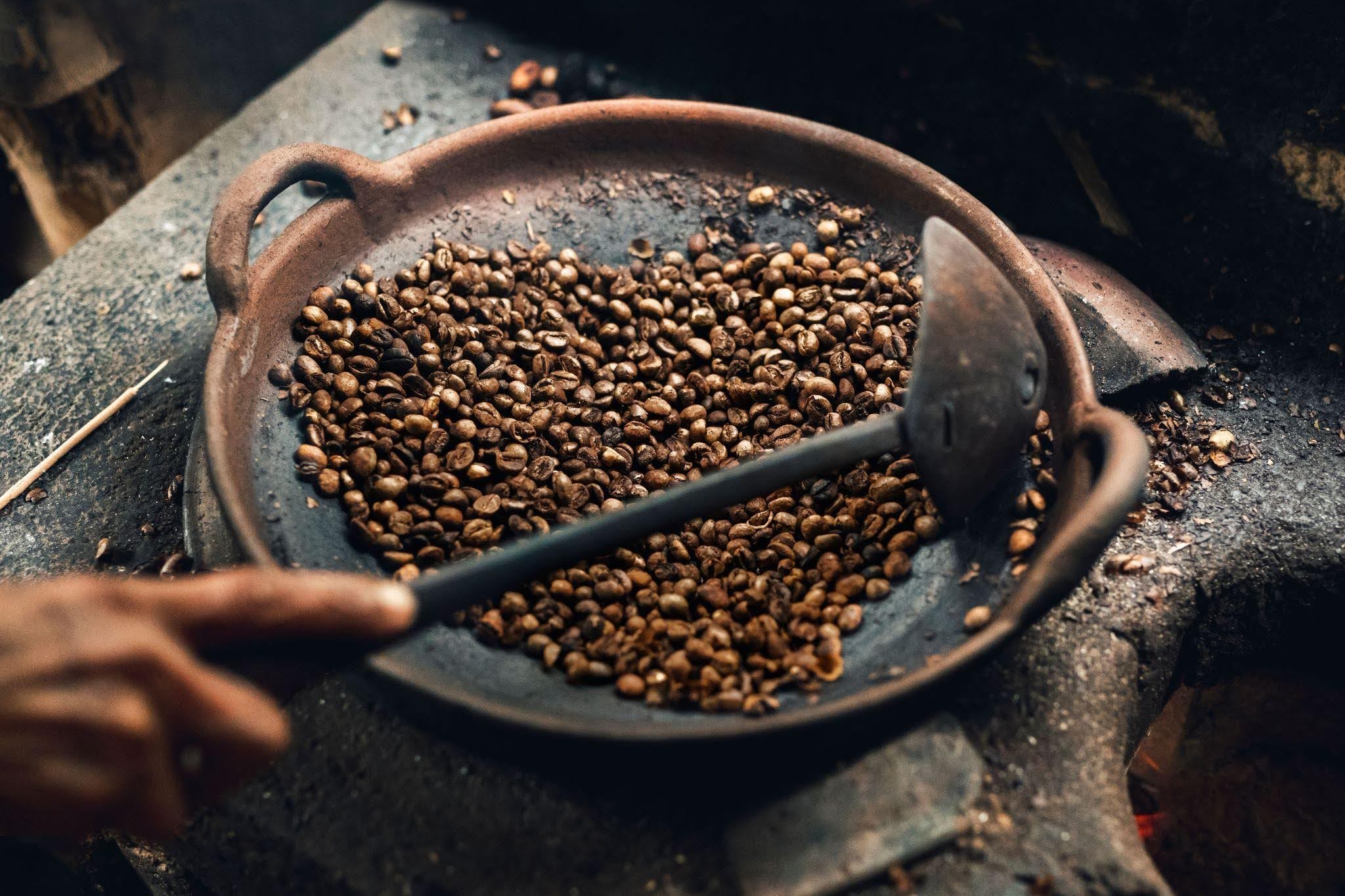
What actually happens is this: coffee beans are seeds. They contain hundreds of chemical compounds — acids, sugars, oils, and proteins. When those compounds interact with heat during roasting, they create flavor molecules that your brain naturally connects to other foods you have eaten before. So when someone says a coffee tastes like dark chocolate, they mean the natural compounds in that roasted coffee trigger the same sensory response as eating a piece of dark chocolate.
Think of it like tuning a guitar. The same strings, played differently, produce completely different sounds. Same bean, different roast or origin, completely different flavor. No additives required.
What Coffee Tasting Notes Actually Mean
The wheel makes it clear that tasting notes aren’t random poetry — they’re part of a structured map of flavor. Once you see that logic, the words start to feel less mysterious and more like a guide.
How the flavor wheel helps
The coffee flavor wheel is a visual tool developed by the Specialty Coffee Association (SCA). It looks a little like a color wheel, but instead of colors, it maps out the entire universe of coffee flavors — from broad categories on the inside to very specific descriptors on the outside.
The inside of the wheel has big groups: fruity, floral, sour/fermented, green/vegetative, roasted, spicy, nutty/cocoa, sweet. As you move outward, those groups get more specific. "Fruity" becomes "berry," then "blackberry" or "blueberry." "Roasted" becomes "tobacco" or "pipe."
You do not need to memorize the wheel. But it helps to know it exists, because it shows that tasting notes follow real, organized logic — not just whatever sounds cool on a package.
How origin and roast affect notes
Two things shape a coffee's flavor profile more than anything else: where it was grown and how it was roasted.
Origin matters because coffee plants absorb the environment around them. Altitude, soil, rainfall, and local bacteria during processing all influence what compounds end up in the bean.
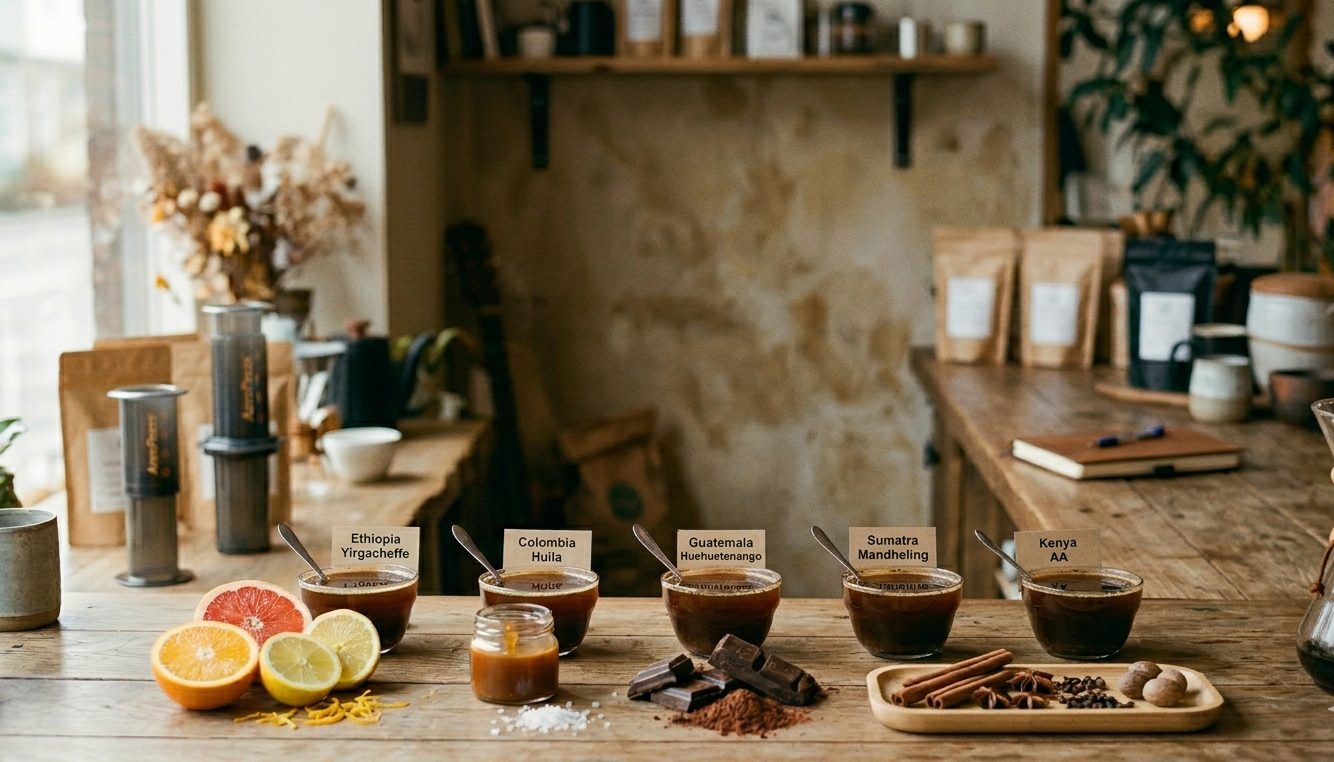
Coffees from Ethiopia often reveal notes of flowers and berries, thanks to the environment and techniques used.
Colombian coffees tend to run sweeter and more balanced. Sumatra often has earthy, herbal depth.
Roast level matters because heat transforms those compounds. A light roast preserves more of the bean's natural fruity and floral character. A dark roast burns those off and develops deeper notes — chocolate, smoky, bitter. Medium roasts live in the middle.
So when you read a coffee flavor profile, you are actually reading a story about where that bean came from and what happened to it along the way.

As roasts get darker, fruit and floral notes fade while chocolate, spice, and smoke grow stronger; medium roasts usually balance sweetness, body, and origin best.
How to Read Common Flavor Terms
These comfort notes set the stage for how approachable coffee can be. Once you recognize chocolate and caramel, you’re ready to notice brighter, sharper flavors that show up in lighter roasts.
Chocolate and caramel
These are among the most common descriptors you will see, and they are genuinely among the easiest to recognize once you know what to look for.
Chocolate notes in coffee almost always refer to dark, roasted depth — the kind of bittersweet finish you taste, rather than candy‑like sweetness. It is more like the way a good dark chocolate bar lingers on your tongue. Medium to dark roasts, especially from Latin America, often carry this note.
Caramel points to sweetness with a slight toasty or buttery edge. It is not sticky-candy sweet. It is more like the way caramelized sugar smells when it is just starting to brown — warm, round, and smooth. This note often shows up in the body of the coffee, meaning it is something you feel as much as taste.
Both of these notes are comfort notes. If you love a cup that feels warm and familiar without being sharp or acidic, these are your keywords.
Citrus and fruit
Citrus and fruit notes come from natural acids and sugars in the bean — especially in lighter roasts and Ethiopian or Kenyan origins.
Citrus can mean a few different things. Sometimes it is lemon — a clean, bright snap at the front of the sip. Sometimes it is orange — a softer, rounder kind of sweet-tart. Grapefruit sometimes shows up in coffees with more intensity. These are all real flavor experiences produced by chlorogenic and citric acids in the bean.
Fruit notes go beyond citrus. Berry, stone fruit (like peach or apricot), and tropical fruit (like mango or pineapple) are all common in naturally processed coffees, where the bean dries inside the fruit and soaks up more of those sugars.
If you have ever bitten into a ripe peach on a summer day, and then tasted a good natural Ethiopian coffee, you might actually catch that connection. That is not magic — that is chemistry.
Spice and deeper roast notes
Spice notes — cinnamon, clove, black pepper, cedar — tend to show up in medium-dark and dark roasts, or in coffees from regions like Sumatra or Central America.
Cedar or wood notes describe a dry, slightly earthy quality in the finish. This is common in aged or Sumatran coffees. It is not a bad thing — it adds complexity and depth, the same way a dash of woodsmoke adds character to a good barbecue.
Cinnamon and clove in coffee are warm, aromatic, and slightly sweet. They often show up in roasts that hit a certain temperature sweet spot — not light, not super dark, but that medium range where sugars have transformed and spice compounds come forward.
If you love dark, heavy music — something with layers, depth, and a little bite — you probably also love coffee with spice and roast-forward notes. There is a reason black coffee and heavy metal go together so well.
How To Use Tasting Notes When Buying Coffee Online
Think of these four elements as the core lineup. Each one adds a different instrument to the band, and together they tell you what kind of “song” that coffee will play in your cup.
What to compare on a product page
When you land on a product page for a bag of coffee, here is what to actually look at:
-
Roast level — Light, medium, medium-dark, or dark. This tells you the baseline before you read anything else.
-
Origin — Where the beans came from. Single origin tells you one place. Blend means multiple.
-
Process — Washed, natural, or honey. This affects sweetness and fruit intensity.
-
Tasting notes — The three or four descriptor words that summarize the flavor profile.
Read these four together, not just the tasting notes in isolation. A "chocolate" note on a light roast from Ethiopia will taste very different from "chocolate" on a dark roast from Sumatra.
Which note families match different preferences
Use this table as a quick cheat sheet when you are deciding between two bags:
|
If you prefer… |
Notes |
Roast |
Origins |
|
Smooth comfort |
Chocolate, caramel, hazelnut |
Medium–dark |
Brazil, Colombia, Guatemala |
|
Bright & lively |
Citrus, berry, floral |
Light |
Ethiopia, Kenya, Rwanda |
|
Bold depth |
Spice, cedar, tobacco |
Medium–dark to dark |
Sumatra, Mexico, Honduras |
|
Sweet fruit |
Tropical, stone fruit, honey |
Light–medium |
Ethiopia (natural), El Salvador |
|
Balanced |
Nutty, cocoa, mild fruit |
Medium |
Colombia, Costa Rica, Perú |
This is not a rigid rulebook. But it gives you a starting point so you are not just guessing based on a cool-looking bag.
How Concept Cafes Coffee Shows Flavor Profiles Across Products
Concept Cafes Coffee does what most brands don’t — it ties coffee to culture, especially music. Each bag is linked to an artist or album, with flavors chosen to reflect the mood and energy of that sound.
-
Type O Negative Universal Donor — dark, heavy, hypnotic; deep roast notes and full body.
-
Soulfly Healer — tribal energy, melodic aggression; lively, character‑driven cup.
You can explore their lineup on Coffee Bags, see everything on All Products, or shop by band through Shop by Artist.
The tasting notes aren’t just decoration — they’re a guide to help you choose coffee that matches your mood and style.
Final Takeaway: Use Tasting Notes To Buy With More Confidence
Coffee tasting notes aren’t elitist jargon — they’re practical shorthand from growers and roasters to help you know what to expect.
-
Chocolate: deep, rich, roasted
-
Citrus: bright, lively, tart
-
Spice: complex, layered, bold
Think of it like music: you wouldn’t put on a random record without knowing if it was doom or death metal. Same logic applies to coffee — read the notes, match them to your mood, and buy with confidence.
Explore the full lineup at Concept Cafes Coffee and check out more guides on the Blog — including whether freshly roasted coffee really makes a difference.
FAQ
What are coffee tasting notes?
Short words that describe natural flavors in coffee. They come from compounds formed during growing, processing, and roasting — not from added flavorings.
Why does coffee taste like chocolate or citrus?
Roasting creates molecules similar to cocoa, giving chocolate notes. Natural acids in beans create bright, tart flavors your palate reads as citrus.
What is a coffee flavor wheel?
A Specialty Coffee Association tool that organizes flavor categories — from broad groups like fruity or roasted to specifics like blackberry or cedar.
How do beginners learn how to taste coffee?
Sip slowly, notice first impressions, then what lingers. Compare light vs. dark roasts to feel differences in acidity, body, and sweetness.
What is the difference between flavor notes and added flavor?
Notes = natural bean qualities. Added flavor = syrups or extracts. “Chocolate note” is not the same as “chocolate flavored.”
How do body and acidity affect coffee flavor?
Body = texture/weight. Acidity = brightness or sharpness. Together they shape how flavor notes land in the cup.
How should you read a coffee flavor profile before buying?
Check roast, origin, process, and notes together. Match note families — chocolate/caramel for comfort, citrus/berry for brightness, spice/wood for depth — to your mood and style.
References
-
Specialty Coffee Association (SCA) – Coffee Taster's Flavor Wheel
-
World Coffee Research – Sensory Lexicon
-
Specialty Coffee Association – Coffee Standards and Protocols
-
National Coffee Association USA – Coffee Around the World
-
National Coffee Association USA – How Coffee Is Roasted